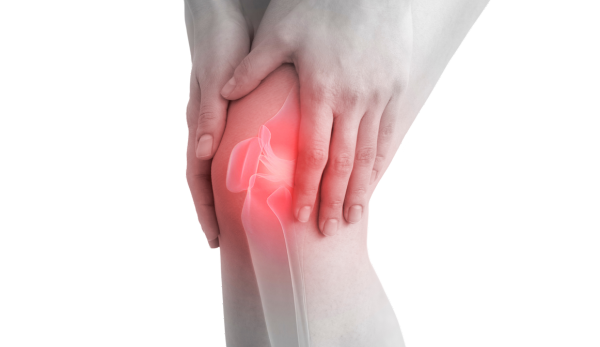
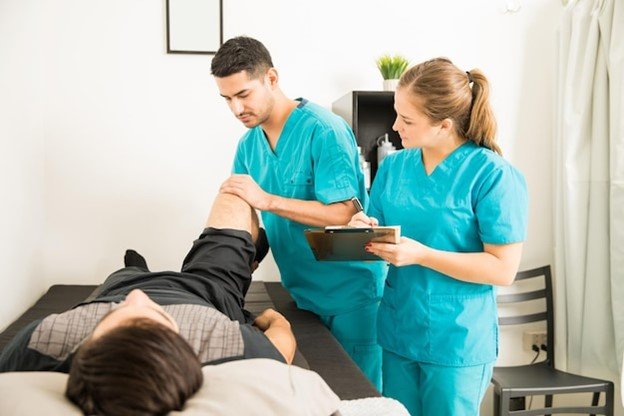
When joint pain, chronic injury or degeneration slows you down, a skilled arthroscopy surgeon can help. Dr Nagraj Shetty, amongst the top arthroscopy surgeons in India, uses the latest minimally invasive techniques in his practice to provide the highest level of care in Mumbai. In this blog, we will take you into the operating theater, let you know how all of it happens, and how joint functionality is fully regained by today’s arthroscopic medicine.
What an arthroscopy surgeon does and why it’s important
An arthroscopy surgeon like Dr. Nagraj Shetty specializes in using small incisions to carry out procedures within the joint. These procedures use small cuts, a camera (arthroscope), and special instruments to fix ligaments, cartilage, joint surfaces, and more. For this reason, the field is purely orthopedic microsurgery, used in joints and not a major open cavity.
For Dr. Nagraj Shetty, a leading sports injury surgeon and arthroscopy expert in Mumbai, the focus is on precision, speed of recovery, and maximum conservation of joint movement!
The OR environment: keyhole access and teamwork
In the OR, you get anaesthetized, your joint is cleansed and prepared and a tourniquet
(if required) is placed. The arthroscope is introduced through the portal. This is one of the features of keyhole joint work, in contrast to more traditional open-surgery methods. These images are displayed on a screen, and the surgeon moves through the joint with the help of dedicated staff.
Because the incisions are so small, less tissue is damaged, there’s little blood loss, and the damaged tissue can be removed from the body. Also, pain is usually less as well. One key reason is that you would usually go home sooner than with open surgery. Dr. Nagraj Shetty specialises in such non-invasive surgeries involving the knee, shoulder, hip, and joints of the ankle and elbow.
Diagnostic phase: seeing inside, planning the repair
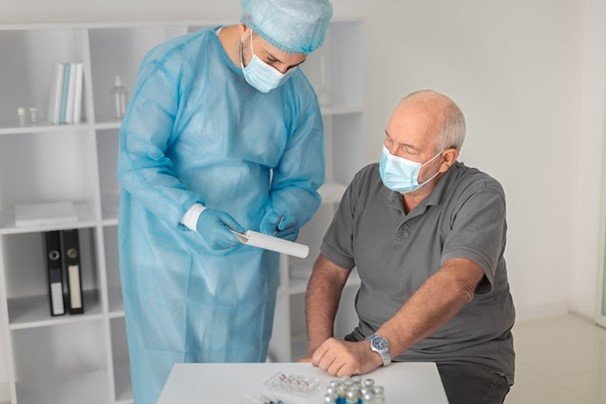
The arthroscopy surgeon investigates the surfaces- cartilage, ligaments, menisci, synovium, and bone in the joint. This direct visualisation is much better than some external imaging. It allows an instantaneous look at the damage — a torn ligament, a cartilage defect, a loose body, or wear on the joint’s surface.
The surgeon views from this perspective and decides which aspects of the injury need to be dealt with; for example, repairing cartilage or ligaments, trimming torn tissue, repairing
meniscus or smoothing out rough surfaces and reconstructing an injured ligament. Every step is focused on rehabilitating the joint back to full function.
“Fixation” phase: regain of stability and range of motion
When the damage is appraised, the real repair work can commence. For a torn ligament (such as the anterior cruciate ligament), the arthroscopy surgeon might utilize a graft (a piece of tendon or synthetic material) to repair the injury. For cartilage lesions methods such as micro-fracture, scaffold implantation or a transplantation of the cartilage could be considered. These treatments are only one piece of a bigger picture that involves restoring joint mobility — not just erasing the pain, but enabling you to move again.
Dr. Nagraj Shetty’s knee programmes, for example, also comprise ligament reconstruction, meniscus repair, and cartilage resurfacing in his joint-preservation work. arthroscopysurgerymumbai.com
Why minimally invasive matters
Arthroscopic procedures offer several benefits over open surgery. Smaller incisions equate to less soft tissue destruction, quicker rehab, lower risk of infection, decreased postoperative pain, and often accelerated return to activity. This is because the arthroscopy surgeon has a very important role in contemporary orthopaedic treatment, particularly for
sport-active patients and those who place a high value on maintaining their mobility.
Plus, the surgeon is not peering through a tiny four-millimeter incision; he or she can see the entire joint cavity with a camera for greater accuracy, and instruments are made for fine work, enough to firmly place this in orthopedic microsurgery.
Mindset for the sports injury surgeon
But while arthroscopic techniques apply to many patients, even those with degenerative joint issues, a significant portion of the practice is grounded in sports injuries: ligament tears, meniscus injuries, shoulder instability, labral tears, and more. As a sports injury surgeon, Dr Nagraj Shetty not only has surgical expertise but he also understands biomechanics,
return-to-sport requirements, and joint mechanics.
This athlete-centric approach influences preoperative planning (what level does the patient desire to return), intra-operative decisions (what graft, what repair), and post-op rehabilitation (when to start getting motion back, strengthening, and RTS).
Rehabilitation And Restoration Of Joint Mobility After The Operation
Operation is half the tale: what really counts is focused rehabilitation. Once an arthroscopy surgeon has done the procedure, a structured rehab plan will be essential in the goal of restoring joint mobility. That makes strengthening, neuromuscular control, flexibility, and adding activity all count. It is really a coordinated effort between the surgeon, physio, and patient that determines how quickly movement is restored and long-term function is maintained.
What joints can be treated with arthroscopy?
Arthroscopic surgery is versatile! The knee and shoulder are ‘the usual suspects’, but a proficient arthroscopy specialist can also tackle different joints.
Knee: Anterior cruciate ligament (ACL), posterior cruciate ligament (PCL), meniscus, cartilage defects, patellar instability.
Shoulder: Rotator cuff tears (arthroscopic repair), labral instability, SLAP lesions.
Hip: femoroacetabular impingement, labral tears.
Ankle and elbow: repair of ligaments, arthroscopic debridement.
So if you are looking for better joint performance through minimally invasive surgery, the skills you need are under one roof.
Why choose Dr Nagraj Shetty for your arthroscopy?
Dr Nagraj Shetty is amongst the top arthroscopy and sports orthopaedics. His qualifications are advanced fellowships abroad, years of experience, and the number of arthroscopic cases performed in a year.
By opting for him, you’re not only getting surgical excellence, but also a whole body approach to rehabilitation and joint movement. When you step into the operating room under his care, it has a mission: to restore your joints, regain your movement, and return you to life.
Frequently Asked Questions
What does an arthroscopy doctor do?
An arthroscopy surgeon operates with small incisions and a camera in the joints. Treatment may involve ligament reconstructions (such as ACL or PCL) along with meniscus repairs, cartilage resurfacing, the removal of loose bodies, the repair of a condylar defect, or the addressing of an instability in the joint, such as synovitis, plica, and loosened tissue.
Transplant or cartilage or more complex ligament work can also be performed by the surgeon, depending on advanced techniques.
What distinguishes arthroscopic surgery from open surgery?
Arthroscopic surgery uses tiny “keyhole” portals rather than large open incisions. Less trauma to soft tissue means less post-operative pain, decreased infection risk and faster recovery while more precise work inside the joint is possible. Magnified vision with
high-definition cameras and dedicated instruments allows the surgeon to perform delicate repairs. Open surgery, however, may require larger exposure, more tissue damage, and longer recovery time.
How are surgeons able to be so accurate with arthroscopic surgery?
Technological advancements in optics and instrumentation, as well as the skills of the surgeon, allow us to obtain precise results. Pre-operatively, with imaging (MRI; CT) we can map the problem, while intra-operatively we have a view in the camera to literally inspect every part of the joint and all our instruments are there for fine work (micro-sutures, small graft tunnels, scaffold placement). The surgeon’s preoperative planning (what technique, graft choice, how to fix) is paramount and proof of success is in the pudding post-op imaging or follow-up. The specificity of this protocol is likely to be advanced in the field of orthopedic microsurgery.
What joints can be treated with arthroscopy?
Arthroscopy can be used to treat many joints. Common ones include: Knee (ligament tears, meniscus, cartilage)
Shoulder (rotator cuff tears, instability, labral injuries) Hip (labral tears, impingement)
Ankle (ligament instability, cartilage lesions) Elbow (loose bodies, ligament repair)
Even complex joint issues (mental colectomy) can benefit from the right surgeons and minimally invasive approaches – for a quicker recovery.
Closing Thoughts
Believe it or not, when you invest in the care of a specialized arthroscopy surgeon, what you’re investing in is a path to regaining function, mobility and a life which exists beyond pain. Dr Nagraj Shetty focuses on every level from diagnosis to recovery. By utilizing the most modern keyhole joint methods, extensive practice in repairing cartilage and ligaments, and with a solid background in sports injury treatment, the aim is simple: We will help
you regain full movement of your joint, enabling you to continue leading an active life.
If you have been suffering from chronic joint pain, instability or injury and are seeking a minimally invasive, movement-directed solution, you may be excited to book an appointment with the center of Dr. Nagraj Shetty today, where we put your joint health and return to motion first.