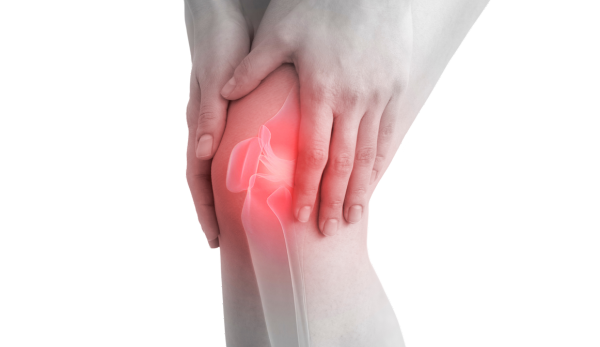
Life for someone who is active — whether you are a weekend warrior, a fitness buff, a dancer or an athlete we won’t judge! Joints (especially the knees and shoulders) bear the brunt of quick movements, turns, jumps and unexpected stress. This is why ligament sports injuries are so prevalent. The ligaments, which hold joints in place, can tear from a sudden twist, fall or heavy load.
At arthroscopysurgerymumbai.com, we are experts in treating ligament tears and providing the kind of state-of-the-art care that gets you back to full use of your knee today while not sacrificing its health tomorrow. This is a blog on the modern ligament tear treatment, and how you to can get back out there and live life sensibly.
Understanding Ligament Tears and When Treatment Is Needed
Ligaments are strong, elastic bands of connective tissue that stabilise and support the joints, limiting their movement. If these ligaments are stretched too far, twisted or abruptly force them (as in the case of a reiki injury), they can tear partially or fully. The course of treatment depends on the severity of the injury.
Some of the more frequently injured ligaments are located in the knee, like the ACL (anterior cruciate ligament), PCL (posterior cruciate ligament), MCL (medial collateral ligament), and LCL (lateral collateral ligament). In the shoulders, ligaments or tendons can also be damaged (such as dislocation, rotator cuff tear or instability). Left untreated, ligament tears can result in instability, repeat injuries or degenerative joint damage.
That is why it’s essential to receive an early diagnosis and treat a ligament tear correctly so that you can recover as soon as possible—especially if you are looking to get back to doing the things you love about your life.
New Treatment Possibilities — From Conservative to Surgical: What Does it Take?
The treatment of ligamentous injuries today ranges from conservative treatments with no surgery at all involved to sophisticated surgical procedures. The decision depends on things like how bad the tear is, whether the joint is unstable, the patient’s age and activity level and if other structures (meniscus, cartilage etc.) are injured.
Non-Surgical / Conservative Treatment
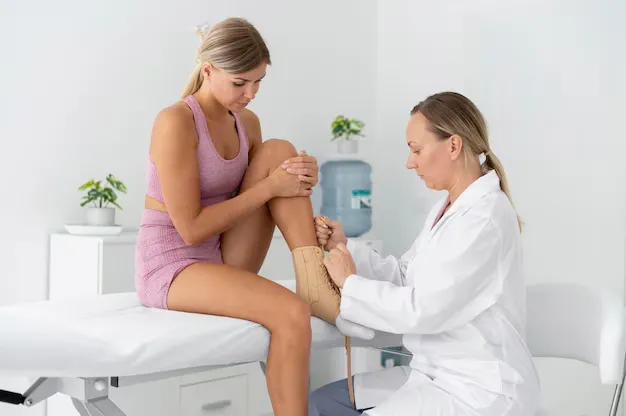
In the case of mild to moderate tears (partial ligament tear), non-surgical treatments may work. These typically include:
Rest, Ice, Compression, Elevation (R.I.C.E) to decrease immediate swelling and pain.
Splints or Supports — to control the movement of the joint, more so during activities or sports.
Pain medication and anti-inflammatories for pain and swelling.
Aggressive Physical Therapy to build muscles around the knee beyond normal level to stabilize joints, increase elasticity and regain function slowly.
In some situations the use of biologic therapies, like platelet-rich plasma (PRP), may be a potential treatment option (but not always).
For some ligament injuries — lots of MCL or PCL injuries in the knee, for example — this conservative approach will probably do, particularly if the patient is relatively inactive or the tear is incomplete.
Surgical Treatment and Ligament Reconstruction
For full thickness tears, high-grade lesions, unstable ligament damage and if conservative management fails (instability persists, joint is not stable or desires of the sports are very high) you should operate.
Under the leadership of Dr. Nagraj Shetty, we focus on advanced arthroscopic surgeries and ligament reconstruction — for the knee, shoulder, ankle and much else.
What is ligament reconstruction?
The torn ligament is replaced with a graft — typically a tendon harvested from another part of the patient’s body (autograft), or sometimes donated tissue (allograft).
Through small incisions and with an arthroscope (a tiny camera) as guide, the surgeon removes damaged tissue and drills small tunnels in bones where the graft is anchored firmly.
This technique is known to be minimally invasive and facilitate the conservation of surrounding soft tissue, causing less scars, and a much more rapid recovery than standard open surgery.
Dr.Shetty has enormous experience - complex multi-ligament knee reconstructions; revision work (if you’ve had a previous unsuccessful repair); as well as the latest arthroscopic techniques for shoulder instability.
Why Choose the Dr. Nagraj Shetty
Dr. Nagraj Shetty is known for knee preservation and shoulder care – minimally invasive arthroscopic and ligament reconstruction surgeries.
Our goal is not just to “fix the tear,” but to restore joint stability, function and help patients get back to their desired level of activity — whether that’s running, gym workouts, sports or daily movement, individually determined.
For the complex—multi-ligament knee injury, revision ACL reconstructions and repair shoulder instability/dislocations—our center has one of only such centers in India with the range and depth of surgical experience necessary to bring a solution to sophisticated case requirement.
The same applies to post-operative care: Well planned rehabilitation (physical therapy, step-by-step increase in force, joint mobilization) is the cornerstone for a good success.
The Need for Rehab: Physical Therapy After Surgery
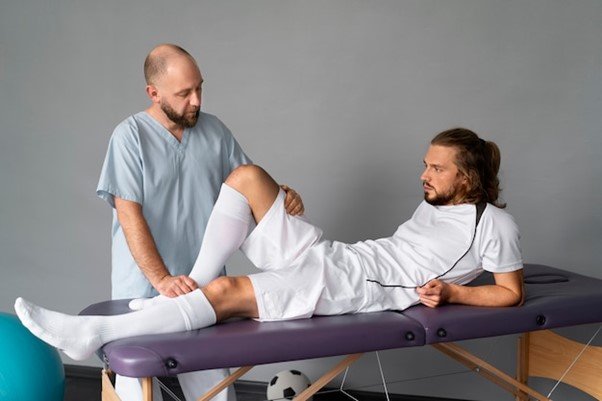
Whether you have ligament reconstruction or decide on conservative treatment, physical therapy following surgery (or instead after the acute phase) is crucial. The aim of rehab is to recover flexibility, build up the muscles that support the joint, get back your range of motion and restore stability to avoid reinjury.
It is common to divide studies into stages of recovery following a surgically reconstructed intervention:
Early stage: managing the swelling, promoting proper healing, gentle range of motion activities and protecting against excessive stress.
Progressive return to strength, lightened weight bearing as tolerated stabilization and balance.
Later phases: sports-specific (if returning to sport) drills, functional rehabilitation with cautious load before graft is fully healed.
Most patients, depending on the severity of the tear and type of graft used, and cheap nba jerseys adherence to rehab cheap football jerseys can get back to normal activities if not sports over Hollyoaks a few months with stability Cheap Oakleys restored.
Rehabilitation Matters:Physical Therapy Following Surgery
Whether you have had ligament reconstruction or conservative treatment, physical therapy post-surgery (or after the acute phase) is key. The objective for rehabilitation is to improve flexibility; rebuild both range of motion and the muscles surrounding the joint, as well as stability in keeping a repeat injury from occurring.
Recovery There are components to normal recovery after a surgical reconstruction:
Phase I: Reduction of swelling, facilitate healing, gentle motion exercises, prevent excessive stress.
Progressive muscle strengthening, weight bearing as tolerated, stability exercise, balance retraining.
Subsequent phases: sport-specific drills (if the patient is returning to sports), functional training, and cautious loading of the graft until the graft has adequate healing.
With progression depending on tear severity, graft type and adherence to rehab, most patients can return to everyday activities or even sports over several months as stability and function are restored.
Ligament Tear Treatment: Not only knees — Also Shoulders, Ankles, and More
As common as they are, knee ligament injuries (such as ACL, MCL and PCL tears) can be found in other joints as well. We’re not ones-trick ponies at our centre, there’s a lot of problems or injuries your shoulder stabilising ligaments tend to suffer from which we can help with.
For example, shoulder instability or repeated dislocations can be corrected using the latest in arthroscopic stabilization and reconstruction techniques to restore stability to the shoulder, with return of function most often possible.
And as it happens, we can do those too: tendon and ligament damage in the ankle for chronic instability or after repeated sprains and severe ligament injury may need stabilisation by reconstruction or repair when been conservative measures have proved ineffective.
Soldier Preventing ligament tears: Injury prevention in the active individual
Today’s treatment methods are also much more effective than they once were, however prevention is still the best option — particularly for young people who are active. There are several preventive measures for reducing the risk of ligament tears, such as:
Good warm up and cool down prior and after doing sports or exercise, including stretches and dynamic motions to ready ligaments and muscles.
Building the muscles around joints, particularly those that support knees, shoulders and ankles. Strong muscles can help absorb shock and decrease the load on ligaments.
When Playing Sports: Correct form and not twisting or landing awkwardly when jumping, let alone standing up with bad posture raises the risk of damaging a ligament.
Preventing overtraining — which means giving the body enough time to rest and recover, as well as gradually increasing intensity to prevent repetitive stress.
Wearing protective equipment or supports when advised, especially in activities that involve cutting / pivoting and with high joint loads.
To the extent that these preventive measures are taken, and given awareness and proper training, little or no risk is posed by ligament injury or re-injury.
Frequently Asked Questions (FAQs)
What are the common types of ligament tears?
You can injure the ligament with a mild sprain, an overstretching of the ligament; a partially torn or complete tear. Within the knee, it is often the ACL or PCL for stabilizing cross-sectional images and then either the MCL or LCL. The place and mechanism of injury would be indicative, as shoulders, ankles, and other joints may also become involved.
How are ligament tear treatment (surgery or therapy) decided?
It also depends on the tear ( mild, moderate or severe), if there are other injuries in this case a repair of the apron itself is far less possible, as well as the stability and age of the patient. How be an athlete first reader have more risk to tore gradually from their knee bones.* Also in older patients with some levels of arthritis surgery apron is not necessary. Conservative treatment of rest, bracing and physiotherapy is effective for mild or partial tears. Ruptures that are full-thickness or status-post instability, or in high demand athletes may be managed with ligament reconstruction surgically.
How long is the recovery period following ligament reconstruction?
Rehabilitation and recovery Rehabilitation of an ACL injury is a complex process. Pain and swelling management, light range of motion exercise and graft protection are initially emphasized. Later, muscle strengthening, joint stabilization and balance exercises are initiated. Complete return to sports or high-impact activity may take several months. Patients commonly go back to their baseline with improved stability and function.
How do you avoid ligament tears in sports?
Prevention & risk factors You can prevent many kicks-related injuries by taking the necessary precautions before you begin exercising, and treating your body the way it deserves to be treated. Conditioning and awareness are key.
Conclusion:
Get Back on Your Feet, Back to Work and Restore Your Confidence with Advanced Treatment
To live an active life shouldn’t mean to be living with a fear of ligament injuries. With the progression of medical science, in particular arthroscopic surgery and ligament reconstruction coupled with concentrated rehabilitation — even severe ligament ruptures can be treated successfully.
At arthroscopysurgerymumbai.com providing contemporary, custom care. Whether you’ve experienced a sports-related ligament tear, common gym or field injury, or even the most complex multi-ligament condition to overcome, our focus is helping you recover safely and delivering stability and function back into your joint so that you can return to the activities in life that you love – without sacrificing the long-term health of your joint.
If you have pain, instability or are concerned about a ligament injury, contact us for an assessment. Early diagnosis and the proper treatment plan is everything.